October 08, 2026
JSC interviews: stalemate in Eastern Cape deputy judge president vote
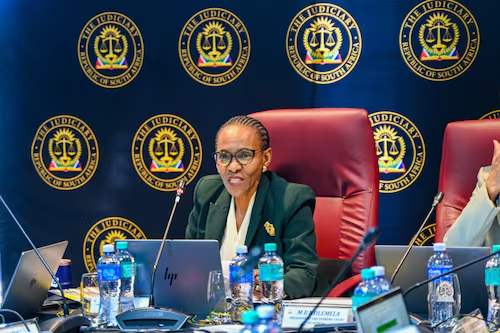
Judicial Service Commission chair and chief justice Mandisa Maya to lead deliberations on the appointment of a deputy judge president post in Eastern Cape.
The Judicial Service Commission (JSC) is set to undertake a second round of voting for candidates interviewed for a deputy judge president post at the Gqeberha high court in the Eastern Cape after none obtained a majority vote.
The JSC interviewed four candidates on Tuesday but did not announce a candidate on whom the commissioners all agreed was suitable for appointment to lead the high court.
In a statement on Thursday, the JSC said none of the candidates achieved the required majority of 13 votes during deliberations on Tuesday.
The JSC chair, chief justice Mandisa Maya, has invited the commission to engage in further deliberations in relation to the candidates.
"The JSC intends to deliberate further and conduct a second round of voting before the end of this [Thursday] current sitting," the statement reads.
Read: JSC interviews: Mthatha high court bribe syndicate 'a thing of the past', judge says
The latest interviews are the second by the JSC for the post after unsuccessful interviews in 2025 that were dominated by allegations that court staff accepted bribes to allocate dates to certain firms and of court files going missing.
The interviews take place as Eastern Cape judge president Selby Mbenenge faces a legal battle to block parliament's impeachment consideration.
The candidate list includes:
. Senior judge Fathima Dawood, who has 18 years' experience on the bench in Mthatha;
. Judge Buyiswa Majiki, who has 13 years' experience;
. Judge Vuyokazi Noncembu, the most junior of the candidates, having been appointed as a high court judge in 2022, relies on her judgment-writing skills; and
. Judge Bulelwa Pakati, who worked as a magistrate for 21
years and was promoted to different levels over the years
Meanwhile, the JSC on Thursday resolved that the KwaZulu- Natal High Court in Durban will get a new judge.
The JSC will advise President Cyril Ramaphosa to appoint senior attorney Jennifer Marion, with 31 years' experience as an attorney, to the bench. She was the only candidate interviewed for the post.
Marion has acted in the high court and magistrates' courts.
During her interview, she was asked about transformation patterns in the legal sector by commissioner Hlaleleni Matolo-Dlepu who described the candidate as a "person passionate about transformation".
"I think me sitting here is an example of transformation. We have seen that the bench is transforming. I cannot say at a rapid rate, but we do see there are many women appointed to the bench which allows for a balance for equity," he said.
"Transformation is a work in progress and as much as we would like to see it done as quickly as possible we have to push for it.
"Like being a part of the legal sector code, we have to push for transformation in every field. The transformation on the KwaZulu-Natal bench is that there are many women on the bench."
The high court in Pretoria on Wednesday reviewed and set aside the promulgation of the broad-based BEE (BBBEE) legal sector code aimed at transforming the sector.
The legal sector code was the first transformation framework specifically for the legal sector.
The legal sector code enjoys support from several legal bodies, including:
. the Pan African Bar Association of South Africa;
. Black Conveyancers Association;
. National Association of Democratic Lawyers; and
. Black Lawyers Association.
October 08, 2026
Refugee policies to be reviewed after court ruling sparks confusion at reception centres
Refugee policies to be reviewed after court ruling sparks confusion at reception centres
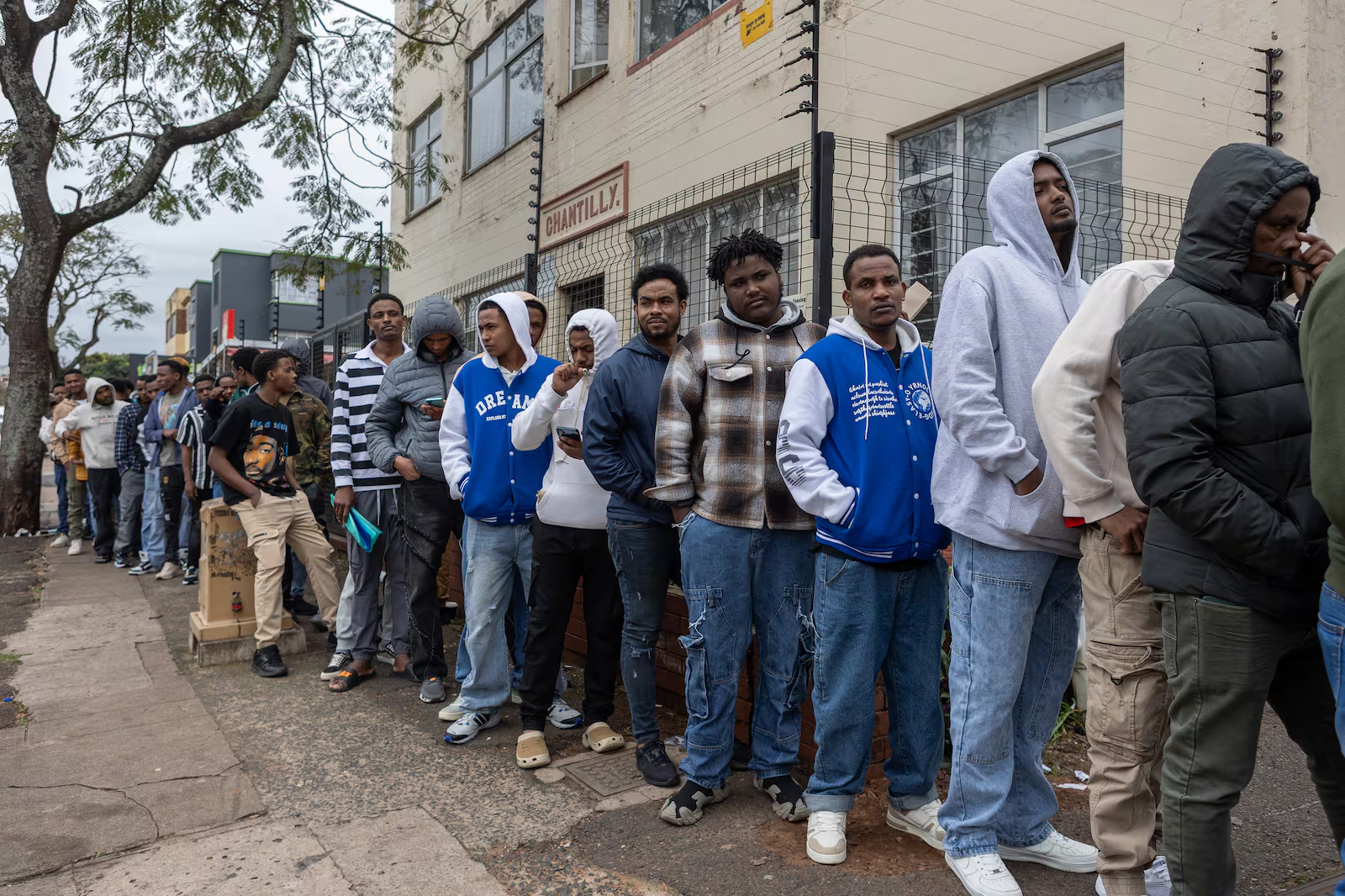
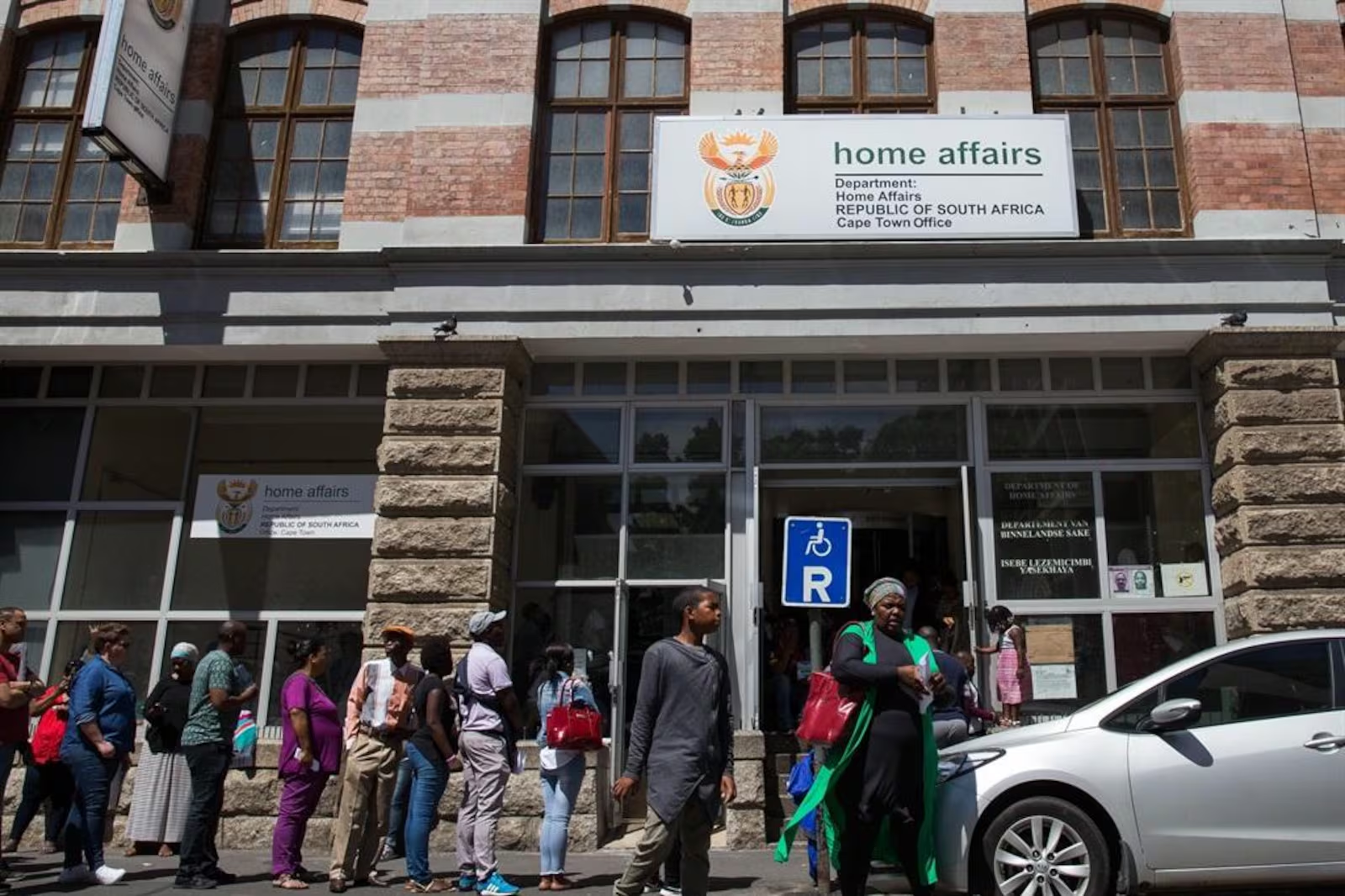
The government is seeking legal advice on managing asylum applications after a Constitutional Court ruling prompted a review of immigration procedures, with long queues forming outside refugee reception centres amid false claims of blanket amnesty for foreigners.
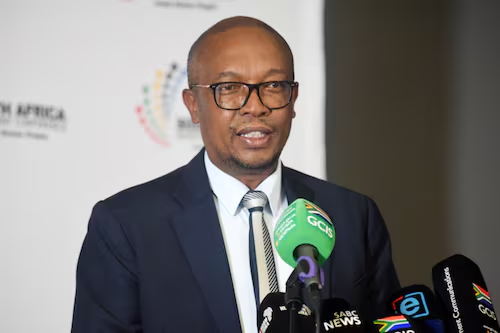
Minister in the Presidency Khumbudzo Ntshavheni said on Thursday the government was assessing its options to address what it called the judgment's unintended consequences. The department of home affairs will review its instructions to refugee reception centres to prevent confusion, she said during a briefing on Thursday by the inter-ministerial committee (IMC) on migration.
The ruling requires officials to assess asylum claims without first excluding applicants because they entered SA irregularly or failed to apply within prescribed deadlines. It does not automatically grant refugee status, citizenship or voting rights, distinctions that have been obscured by misinformation circulating online.
"We have met. We continue to meet to process this issue so we are guided by the law'' Ntshavheni said.
She raised the possibility of debating constitutional amendments through the National Dialogue if South Africans believed the constitution did not adequately protect their interests.
The government would implement the ruling within its administrative capacity while considering its legal options, she said.
Home affairs issued the directive in September after the court's July 7 judgment in a case brought by the Scalabrini Centre of Cape Town and its trustees.
The court confirmed provisions of the Refugees Act were unconstitutional, including requirements that applicants without valid visas first satisfy officials they had valid reasons for their circumstances before being allowed to seek asylum.
The barriers prevented consideration of whether applicants needed protection and risked returning people to countries where they could face persecution or other serious harm. Applicants must have their claims assessed to determine whether they qualify for refugee status.
Home affairs said on Wednesday it had opposed the case but was constitutionally obliged to implement the judgment. It rejected allegations that the changes were initiated by the minister or political parties, or amounted to blanket legalisation of foreigners.
The department said it would refer what it described as a co-ordinated disinformation campaign to the Electoral Commission of South Africa (IEC) under its code on countering disinformation.
HOME AFFAIRS:
Claims that this judgment by the Constitutional Court grants asylum seekers citizenship or provides for the blanket legalisation of foreign nationals are also categorically false.
Respect for binding court judgments is fundamental to the rule of law and our ... pic.twitter.com/NpmvWuvOVZ
- Thando Maeko (@HelloThando) October 7, 2026
The IEC has dismissed claims that asylum seekers can now vote. Only South African citizens aged 18 and older who are registered on the voters' roll are eligible. Applying for asylum does not confer citizenship.
This information is incorrect.
Asylum seeker status does not give a person the right to vote in South African elections. Only South African citizens who are 18 years or older & on the voters' roll are eligible to vote.
Always verify information through official IEC platforms.- IEC South Africa (@IECSouthAfrica) October 6, 2026
Ntshavheni said the queues gave home affairs an opportunity to establish who qualified to remain in the country. People who did not qualify for asylum or another lawful basis to stay would face removal after being processed, she said.
"If you know you do not qualify, don't come and clog our system," she said.
Home affairs had begun revoking asylum or refugee statuses obtained fraudulently after Special Investigating Unit investigations, Ntshavheni said. The department was handling the revocations in batches and would release figures later.
Justice minister and chairperson of the IMC Mmamoloko Kubayi supported extending the SIU investigation to cover the asylum system, she said.
Business Day
October 08, 2026
Blow to Tau as court rules he skipped a step on BBBEE legal code
The Pretoria high court finds the minister failed to personally assess the legal sector code's deviations.
Trade, industry & competition minister Parks Tau has suffered a major blow after the high court in Pretoria reviewed and set aside the promulgation of the broad-based BEE (BBBEE) legal sector code aimed at transforming the sector.
This means the first transformation framework specifically for the legal sector is now legally invalid and will no longer be operational. Law firms will no longer be rated according to the legal sector code, which they argued set "impossible targets".
In one of the biggest litigations of the year, top law firms Deneys (formerly Norton Rose Fulbright SA), Bowmans, Webber Wentzel and Werksmans had taken the minister to court seeking to have the promulgation of the legal sector code reviewed and set aside.
In a judgment delivered on Wednesday, the full bench of the Pretoria high court, consisting of judges Nicolene Janse van Nieuwenhuizen, Selemang Mokose and Annali Basson, did not rule on whether the legal sector code was unconsitutional but rather if Tau followed legal procedure in gazetting it.
Legal requirement
It found that when the minister published the code two months into office, he did not fully consider the framework as the law required him to do.
The code, which was in the making since 2020 and was supported by several legal bodies, has been effectively scrapped from operation. This comes as government policies aimed at transformation face major pushback and fail to pass the constitutional muster in courts.
The code required firms to increase black ownership, management, control and procurement. It stipulated that law firms should have 30%-50% black legal practitioners as equity directors in the next five years.
The court found "compelling evidence" of Tau's misunderstanding of the function he was required to perform in gazetting the code. His predecessor, former minister Ebrahim Patel, left office without approving the codes, having raised concerns about their compliance with legal provisions.
The court found Tau as minister relied on his department's brief on the codes, whereas the law required him to evaluate for himself whether its deviations from the previous generic codes were justified.
"It [the law] required him to decide for himself on the material before him, whether the proposed code and its material departures from the generic codes were justified and whether the exercise of the section 9(1) power was warranted. On the minister's own account, that is not the function he understood himself to be performing," the judgment reads.
In a statement Deneys welcomed the judgment.
"The court recorded its regret that the substantive questions could not be determined at this stage, given the urgency of transformation. Deneys shares the wish to see a lawful sector code in place," the firm said.
Business Day
October 08, 2026
SA mechanic taken hostage in Mozambique in September released unharmed
The mechanic is one of five South Africans caught up in the insurgent attack in Mozambique in September when a hunting lodge and the town of Marangira were raided by rebels believed to be linked to an Islamic State affiliate group
The department of international relations and co-operation (Dirco) has confirmed the South African citizen who went missing in Mozambique during the first week of September was released unharmed on Sunday.
The 30-year-old mechanic from Phalaborwa, Limpopo, left Mozambique on Wednesday.
He is one of five South Africans affected by the insurgent attack in Mozambique in September when a hunting lodge and the town of Marangira were raided by rebels believed to be linked to an Islamic State affiliate group.
The South Africans were employed for different services.
The mechanic was among three civilians from the lodge reported to have been taken hostage by the group after the lodge was plundered and burnt.
Dirco said at the time of his capture he worked as a mechanic at a camp in the Marrupa district of Niassa Province in northwestern Mozambique.
According to Dirco, the South African high commission in Maputo worked diligently with stakeholders in Mozambique to render consular assistance and secure his release.
The department said: "The South African government extends its gratitude to the government of Mozambique for its efforts towards the safe release of the South African national."
-TimesLIVE
October 08, 2026
ActionSA warns new asylum directive could deepen SA’s immigration crisis
Being allowed to apply for asylum does not mean an applicant has been granted refugee status, says ActionSA
ActionSA has warned that a new home affairs directive allowing undocumented people to lodge asylum applications could place further pressure on South Africa's already strained immigration system.
The directive instructs refugee reception offices to accept asylum applications from people who entered the country unlawfully, entered outside designated ports of entry, have no visa or did not declare their intention to seek asylum when they entered.
The practical consequences of this directive will be disastrous for South Africans if implemented through a broken asylum system that is already overwhelmed
- ActionSA parliamentary chief whip Lerato
Ngobeni
ActionSA parliamentary chief whip Lerato Ngobeni said the party recognised that the directive gives effect to a July 2026 Constitutional Court judgment in the Scalabrini case, but raised concerns about how the asylum system would cope with the additional applications.
"The practical consequences of this directive will be disastrous for South Africans if implemented through a broken asylum system that is already overwhelmed and a border-management system that remains severely constrained," Ngobeni said.
She stressed that being allowed to apply for asylum did not mean an applicant had been granted refugee status.
ActionSA is particularly concerned about the period between an application being lodged and a final decision being made, saying applicants could obtain temporary legal status and move into communities while their claims are being processed.
The party has proposed integration and repatriation centres near South Africa's borders and at strategic inland locations, where asylum seekers could be accommodated while their identities and claims are assessed.
It also wants biometric registration, stricter processing timelines and a system that distinguishes people seeking international protection from economic migrants.
ActionSA said it supported the First Safe Country Principle, under which people who have passed through safe third countries would ordinarily be expected to seek protection there, subject to South Africa's constitutional and international obligations.
Ngobeni said the party wanted home affairs to explain how the new directive would affect asylum application numbers, processing capacity, biometric tracking and the repatriation of unsuccessful applicants.
The party also called for clarity on how the directive will interact with the government's Revised White Paper on Citizenship, Immigration and Refugee Protection, which includes the First Safe Country Principle.
"South Africa can protect genuine refugees and secure its borders. We can respect international law and put South Africans first," Ngobeni said.
The Constitutional Court ruling means unlawful entry cannot, by itself, prevent a person from lodging an asylum application. ActionSA said the government must comply with the judgment while ensuring that asylum claims are processed efficiently and that those who do not qualify for protection are dealt with in accordance with the law.
-TimesLIVE
October 07, 2026
AKA judge reverses witness evidence ban
Judge Nomfundo Sipunzi amends ruling she made on Monday banning media from reporting on witness evidence
A Durban high court judge reversed her decision to prevent media from reporting on witness evidence during the Kiernan "AKA" Forbes and Tebello "Tibz" Motsoane murder trial.
Judge Nomfundo Sipunzi sparked concern on Monday when she imposed a media blackout on witness testimony in the trial of seven men facing 11 charges related to the killing of the two friends outside the now defunct Wish restaurant, in Florida Road on February 10 2023.
Lindokuhle Thabani Mkhwanazi, Lindani Zenzele Ndimande, Siyanda Eddie Myeza, Mziwethemba Harvey Gwabeni, Lindokuhle Mhlaliseni Ndimande, Malusi Dave and Siyabonga Gezani Ndimande pleaded not guilty when the trial started in the Durban high court on Monday.
In her ruling, Sipunzi ordered that witness testimony may not be broadcast.
She said in the matter of the state versus Lindokuhle Mkhwanazi and six others, while the court recognised the importance of free expression and open justice, it also had to protect the accused's right to a fair trial and the interests of witnesses.
"No media coverage shall disclose the identities or personal particulars of any witnesses called by either the state or the defence. Media shall not publish or broadcast the evidence of witnesses while they are testifying nor any exhibits admitted or attended as part of the trial record, unless otherwise
authorised by the court," Sipunzi ruled.
No media coverage shall disclose the identity of personal particulars of any witness called by the state or the defence
- Judge Nomfundo Sipunzi
"Media representatives may only publish, report on and broadcast the plea, commencement and close of the state and defence cases, arguments advanced by council, rulings and orders issued by the court and any judgement delivered by the court."
She also ordered that "photographs of the courtroom may be taken only before the commencement of the daily proceedings and after the court has adjourned".
But on Wednesday she overturned the directive allowing media to broadcast witness testimony but stood firm on her decision not to disclose the witnesses' identities.
"The media representatives may publish or broadcast the evidence of witnesses while they are testifying, and any exhibits admitted or tendered as part of the trial record. However, no media coverage shall disclose the identity of personal particulars of any witness called by the state or the
defence."
The South African National Editors' Forum (Sanef) said it was "alarmed" by another ruling by a judge of the high court that apparently restricts the ability of journalists to perform their work in covering a case of national importance in the public interest. It said the order was understandable if this
was due to concerns for their safety.
"This follows a similar, but now rescinded order, by Pretoria high court judge Mashudu Munzhelele, presiding over the corruption trial of former defence minister and speaker of parliament Nosiviwe Mapisa-Nqakula," Sanef said.
"Judge Munzhelele initially prohibited the broadcasting of the trial, and ruled that journalists could listen to, and report on, witness testimony but not quote witness testimony verbatim. However, following submissions by eNCA and the SABC, judge Munzhelele altered her position and granted
permission for the rest of the trial to be broadcast, especially in view of the public interest in the case."
Sanef said the Madlanga commission of inquiry has proved that it is possible to broadcast and report on proceedings while protecting witnesses and balancing the public's right to know and open justice.
It called on the judiciary to enable the work of journalists and to act in accordance with the principles of open justice.
TimesLIVE